
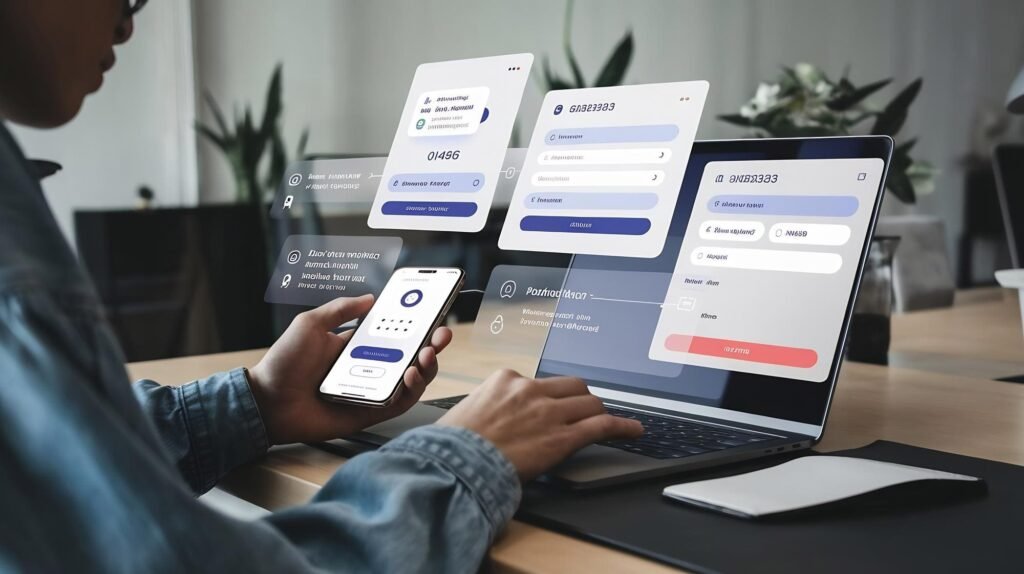
Quick Answer
Progressive Web Apps (PWAs) combine the speed of native apps with the ability to access them from any device. They are a cheap solution for transportation firms that works on all devices. They work offline, send push alerts, and load faster without needing to be in the app store. PWAs cut development costs by as much as 60% while still providing a better user experience for booking, tracking, and getting changes in real time.
Ready to Transform Your Transport Platform?
Discover how Fospertise can build high-performance PWAs for your transport operations. Contact us for a free consultation.
Learning about PWAs in Transportation
Progressive Web Apps are the next step in web technologies for transportation. They work like regular mobile apps, but they can be accessed from any platform. Modern transportation businesses are using PWAs to make booking processes easier, get customers more involved, and cut expenses.
The Main Benefits of PWA Technology
- Works on All Platforms: PWAs function perfectly on iOS, Android, and desktop without needing separate codebases. This means that you don't need as many development teams and maintenance is easier. Transport businesses can send out updates right away, without having to wait for app store clearance. This makes sure that all users can use the newest features at the same time.
- Offline Capabilities: Service workers let PWAs work without an internet connection, which is very important for transportation. Even in places with bad network service, passengers may see their tickets, check their timetables, and look up their booking history. This stability makes customers happier and cuts down on assistance requests when there are connectivity problems.
- Lower Development Costs: PWAs need 60% less money to build than native apps, but they work just as well. Maintaining a single codebase lowers ongoing technical debt and speeds up the release of new features. Companies save a lot of money on annual developer program memberships and app store fees.
- Instant Updates: PWAs automatically update when users open the app, so there are no problems with version fragmentation. Transport operators may send out important details right away, such as changes to routes or fares. This makes sure that all users follow the rules and that operations are consistent across the board, without requiring any action from users.
Technical Implementation for Transport
When adding PWAs to transportation systems, you need to carefully consider the architecture and improve performance. React, Angular, and Vue.js are some of the modern frameworks that make it easy to design scalable PWA solutions. The main technological requirements for PWA functionality are service workers, manifest files, and HTTPS protocols.
- Architecture of Service Workers: Service workers work as proxy servers between networks and online apps, which lets them work offline. They store important resources like booking interfaces, route maps, and user data so that they may be accessed right away. If you set up your service worker correctly, PWAs will load in less than three seconds, even on slow networks, which is what Google wants.
- Integration of Data in Real Time: WebSocket connections and REST APIs make it easy for PWAs to work with real-time tracking systems. Transport businesses can show the current positions of their vehicles, when they are expected to arrive, and changes on their routes without having to reload the page. Background sync keeps data consistent even when users lose their connection for a short time while traveling.
- Push Notification Plan: Transport companies can give timely updates regarding delays, gate changes, and special offers through web push notifications. PWAs may provide notifications without needing to install the whole app, which makes things easier for users. PWAs get 15% more permission for notifications than regular web requests because they are better timed and in the right context.
- Payment Integration: PWAs work with modern payment APIs like Google Pay, Apple Pay, and Payment Request API to make transactions go smoothly. Tokenized payment methods make checking out easier and can increase conversion rates by up to 25%. Secure payment processing in PWAs meets PCI DSS standards without needing to buy more hardware.
- Improving Performance: Code splitting, lazy loading, and image optimization make sure that PWAs load in less than a second, no matter what the network conditions are. Transport PWAs need to focus on rendering the most important parts of booking and monitoring functionalities while putting off less important stuff. Progressive enhancement tactics make sure that everything works in all browsers while giving better experiences on newer platforms.

ROI and Business Impact
PWAs help transport operators get real commercial results by making users more engaged and operations more efficient. Companies say that the number of bookings that are completed has gone up by 40% and the number of customer support calls has gone down by 35%. Less technological overhead and shorter deployment cycles speed up the time it takes to get new features and services to market.
- Benefits of Getting New Users: PWAs get rid of app store problems, so customers can go to services right away by using web URLs or QR codes. Compared to standard app marketing campaigns, this cuts the cost of getting new customers by 30–40%. Transport companies may get people to use their services using search engines, social media, and offline ads without having to install an app.
- Improvements in the Conversion Rate: PWAs have 50% greater conversion rates than mobile web experiences since they look and work like apps and are faster. Booking routines that are easier to use and have autofill features cut checkout time from 8 minutes to less than 2 minutes. The ability to add to the home screen keeps the brand in front of customers, which leads to 60% more repeat bookings.
- Savings on Operational Costs: Maintaining a single codebase cuts development costs by 50% compared to making native apps. PWAs do away with app store fees, which can add up to $15,000 to $30,000 a year for business transportation apps. The cost of cloud infrastructure goes down by 25% because of better caching and less demand on servers because of offline-first architecture.
- Benefits of Data and Analytics: PWAs give you more information about how users behave by integrating web analytics, and they don't have the same privacy constraints as native apps. Transport firms can follow the whole path of a user, from finding a ride to booking it to giving feedback after the trip. Real-time analytics let you change prices on the fly and make tailored service suggestions that raise the average value of a transaction by 20%.
Growth and Scalability
- Automatic CDN Distribution: Global performance optimization without additional configuration
- Zero-Downtime Updates: Seamless updates during maintenance windows
- Elastic Cloud Infrastructure: Adjusts automatically to traffic patterns
- Multi-Language Support: Without separate app versions
- Hardware Integration: Support for WebUSB and Web Bluetooth for contactless interactions
PWAs make sure that investments in transportation technology will last by adapting to new web standards and device capabilities. They support additional features like WebUSB for connecting hardware and Web Bluetooth for interactions without touching. This flexibility keeps transportation companies competitive as client needs and technology change.
PWAs and Native Apps for Transportation
| Progressive Web Apps | Native Mobile Apps |
|---|---|
| Build for One Platform Only One codebase works with all devices and platforms right away. Development teams work on delivering features that work on all platforms without having to make changes for each one. Updates are sent out at the same time on iOS, Android, and desktop without any problems with coordination or version fragmentation. | Separate Development of Platforms Requires separate development teams for iOS and Android, each with its own set of skills. Problems with feature parity cause releases to be delayed and user experiences to be uneven. The cost of maintenance goes up because issues have to be resolved on each platform independently. |
| PWA Investment: $40,000–$80,000 Initial Development A single, cohesive effort to build for all platforms and devices. Has features including progressive enhancement, offline use, and push notifications. There are no extra fees for listing in the app store or getting platform-specific certifications. | $120,000–$200,000 Initial Development Use different technology stacks and teams for iOS and Android development. Extra $15,000 to $30,000 a year for app store fees, certificates, and other legal needs. Higher continuing maintenance costs because there are many different platforms and it's hard to keep track of all the different versions. |
| Instant Access via URLs Users access services immediately through web links or QR codes without installation. Reduces customer acquisition friction and marketing costs by 30–40%. Search engine visibility drives organic traffic without app store optimization requirements. | App Store Installation Required Users must find, download, and install apps before accessing services. Installation friction causes 60–70% abandonment during download process. App store optimization and paid acquisition campaigns required for visibility and downloads. |
| Automatic Updates Updates deploy instantly when users access the app without approval delays. Critical fixes and feature rollouts happen simultaneously for all users. Zero version fragmentation ensures consistent experience and regulatory compliance across user base. | App Store Review Process Updates require app store approval taking 24–72 hours minimum. Users must manually download updates, creating version fragmentation. Critical fixes delayed by review process, impacting service quality and compliance during approval periods. |
Commonly Asked Questions
Can PWAs be used to arrange transportation when there is no internet?
Yes, PWAs employ service workers to store important information like timetables, routes, and user data. Passengers can see their current reservations, check the schedule, and get tickets even if they don't have internet access. New bookings automatically go into a queue and are processed when the connection is restored. This makes for a smooth user experience.
Do PWAs let you track vehicles in real time?
With sub-second latency, PWAs let you follow GPS in real time using WebSocket connections and REST APIs. Background sync makes sure that location data is always up to current, even when the app isn't open. Geolocation APIs let transportation companies do things like find nearby stops and improve their routes.
How do PWAs handle payments for transportation services?
PWAs work safely with Payment Request API, Google Pay, Apple Pay, and regular payment gateways. Tokenized transactions are PCI DSS-compliant because they don't keep sensitive card information. Saved payment methods make checking out easier, which boosts conversion rates by 25 to 40% compared to regular web forms.
What's the typical development timeline for a transport PWA?
It takes 3 to 4 months to build and deploy a basic PWA with booking and tracking features. It takes 5 to 7 months to build complex systems that use AI, multi-modal routing, and advanced analytics. PWAs start up 40% faster than native apps since they don't need separate development cycles for iOS and Android.
Can PWAs send push alerts like apps that are already on your phone?
All major browsers, including Chrome, Firefox, Edge, and Safari 16.4 and up, allow web push notifications for PWAs. Transport companies can send alerts about delays, reminders to board, and promotional offers that work much like native apps. Because users are more aware of the context and time, the average rate of notification permissions is 15% higher.
How do PWAs perform compared to native apps in transport operations?
Modern PWAs have load times of less than 3 seconds and 60 frames per second animations, which is the same as native apps. Service worker caching makes the next load happen right away, and it can be faster than native apps. Transport businesses say that PWAs and native apps have the same user satisfaction scores, but PWAs cost 60% less to build.
Are PWAs good for managing a fleet of vehicles for a business?
PWAs are great for managing fleets because they provide real-time dashboards, capabilities for talking to drivers, and tools for optimizing routes. They can easily handle hundreds of vehicles and thousands of daily activities. Enterprise PWAs connect to current ERP and dispatch systems through REST APIs, giving users full access without having to rebuild their infrastructure.
What kind of upkeep do transport PWAs need?
PWAs need half as much maintenance as native apps because updates happen instantly and don't need to be reviewed by the app store. It takes 2 to 4 hours for developers to make security patches and speed improvements per month, compared to 8 to 12 hours for native versions. Maintaining a single codebase gets rid of problems with syncing versions across platforms.
Use PWA Technology to Change How You Transport Things
Are you ready to update your transportation platform with Progressive Web App technology? Fospertise is an expert at making high-performance PWAs for passenger transport, logistics, and fleet management. Our team of experts creates solutions that can be scaled up and used offline. These solutions lower expenses and increase user engagement.
Get in touch with us today to talk about how PWAs can speed up your digital transformation and help your organization get real results.
Get Free Consultation